
Radiochemical Analyses
The measurement of radioactive isotopes in water, soil and other environmental matrices is a critical component of environmental monitoring, public health protection, and regulatory compliance. The TEC Radiochemical lab is a leading and distinguished laboratory in this field at Saudi Arabia and Gulf countries. Among the radiation tests performed by TEC Laboratory are:
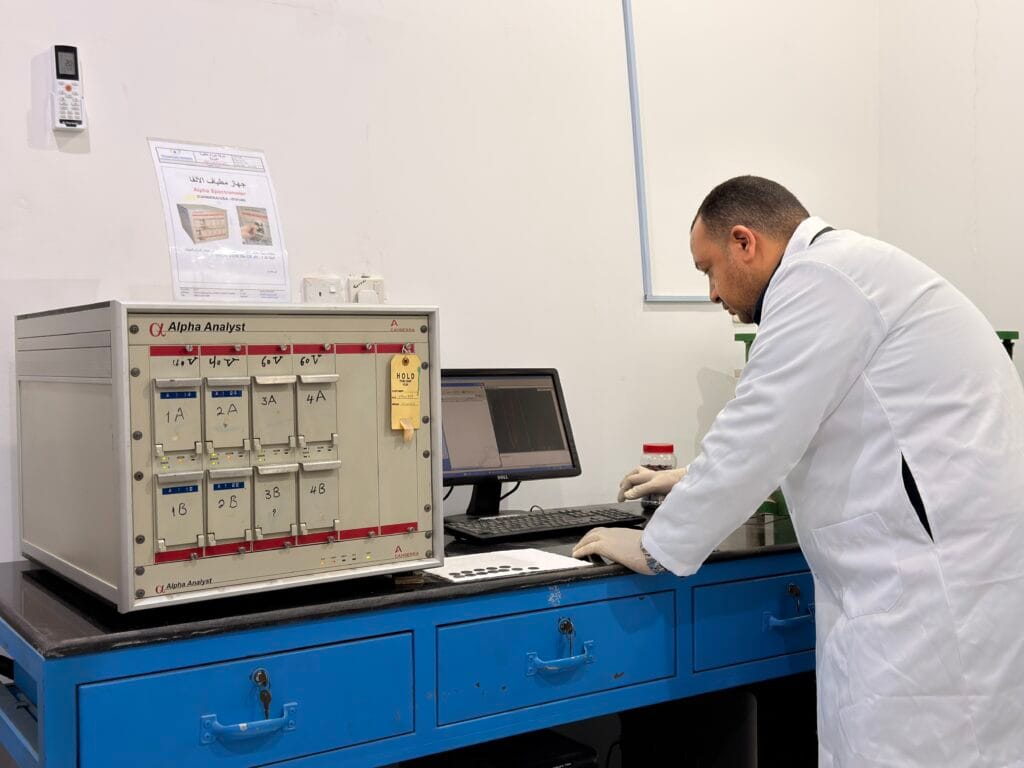
Alpha Spectrometry
All alpha radioactive isotopes in water and environmental samples are measured using a low-level alpha spectrometer to determine uranium and thorium isotopes U-234, U-238, Po-210, Sr-90, Th-232, … and other alpha radioactive isotopes.
This is achieved through isotope separation using a strong anion exchanger and electrochemical deposition on specially designed stainless-steel discs followed by alpha particle spectroscopy. This method is characterized by a very low minimum threshold (MTL), which is less than 10 mBq/sample.
Alpha Spectrometry
All alpha radioactive isotopes in water and environmental samples are measured using a low-level alpha spectrometer to determine uranium and thorium isotopes U-234, U-238, Po-210, Sr-90, Th-232, … and other alpha radioactive isotopes.
This is achieved through isotope separation using a strong anion exchanger and electrochemical deposition on specially designed stainless-steel discs followed by alpha particle spectroscopy. This method is characterized by a very low minimum threshold (MTL), which is less than 10 mBq/sample.
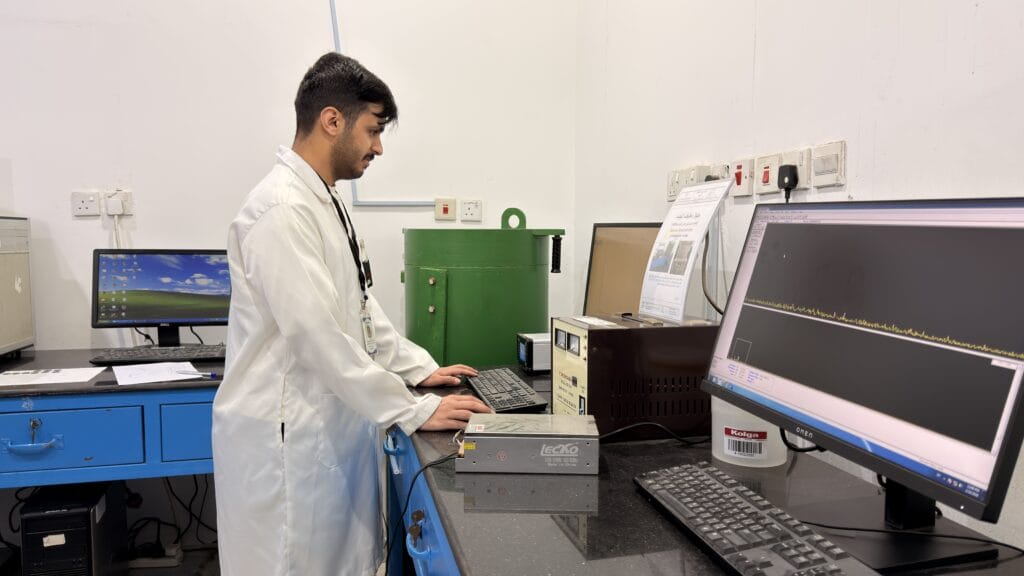
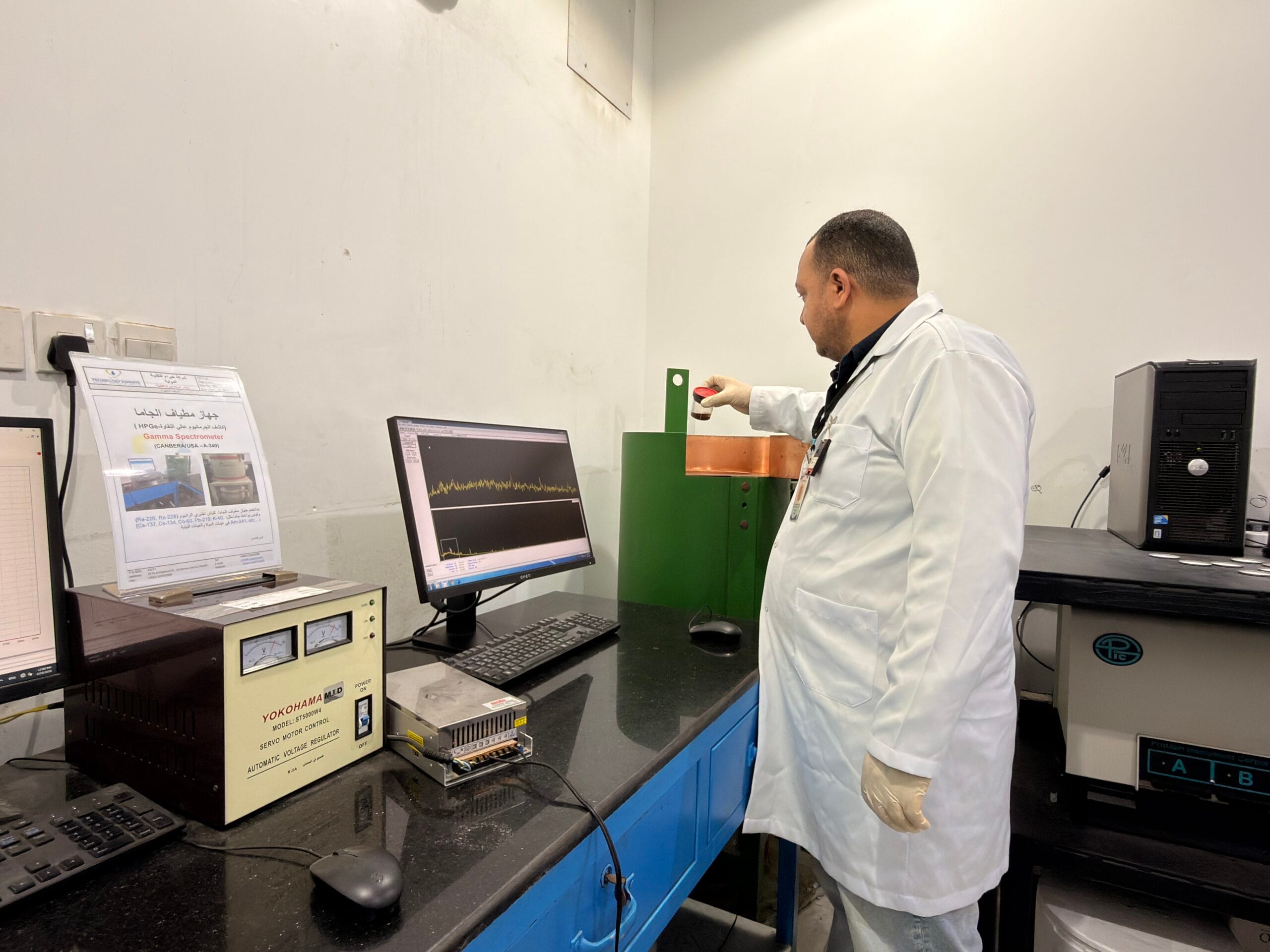
Gamma Spectrometry
All gamma radiations (Cs-137, Cs-134, K-40, etc.) in water and environmental samples are measured using a gamma analyzer with a highly sensitive detector (40% HPGE).
The activity of the radionuclides of the gamma emitters present in the water is then determined, and the result appears as spectra, each with a specific energy that distinguishes it from the other isotopes.
This method applies to water samples and environmental samples containing nuclides that emit photons in the energy range between 60 keV and 2000 keV. The photon detection limit must be 0.1 of the lower limit of measurement. For example, cesium-134 (10 picocuries/L) and cesium-137 (20 picocuries/L).
Gamma Spectrometry
All gamma radiations (Cs-137, Cs-134, K-40, etc.) in water and environmental samples are measured using a gamma analyzer with a highly sensitive detector (40% HPGE).
The activity of the radionuclides of the gamma emitters present in the water is then determined, and the result appears as spectra, each with a specific energy that distinguishes it from the other isotopes.
This method applies to water samples and environmental samples containing nuclides that emit photons in the energy range between 60 keV and 2000 keV. The photon detection limit must be 0.1 of the lower limit of measurement. For example, cesium-134 (10 picocuries/L) and cesium-137 (20 picocuries/L).
Gross Alpha and Beta measurement
The total count of alpha and beta particles aims to obtain sufficient preliminary information about the overall activity of the sample, thus determining whether further detailed measurements are required. Total scanning methods also aim to provide rapid information related to a specific interference level of the radiation.
This method is applicable to alpha particles with energies above 3 MeV and beta particles with energies above 0.1 MeV. The system uses a proportional gas counter supplied with P-10 gas, a mixture of argon and methane in 90% and 10% proportions, respectively.
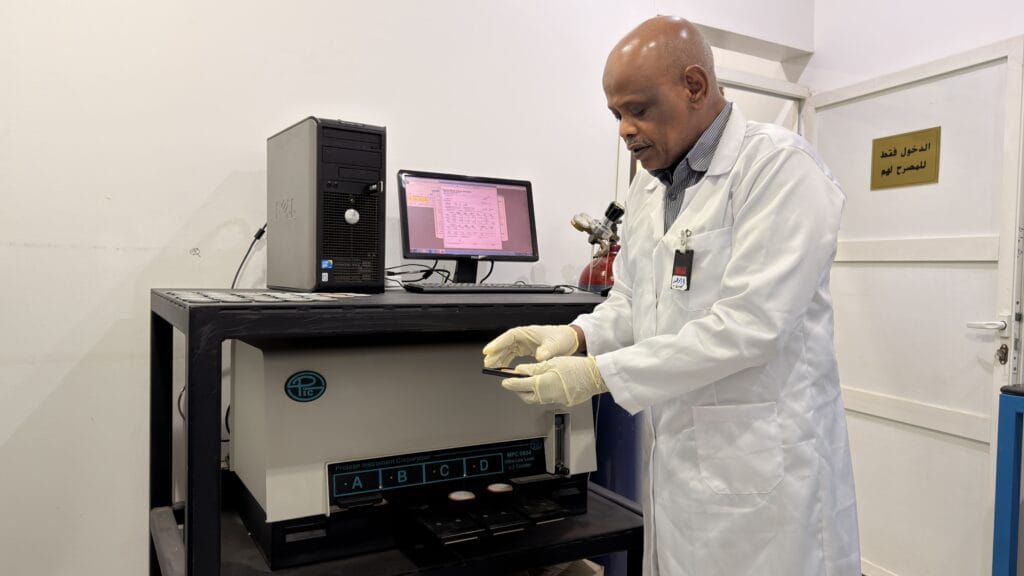
Gross Alpha and Beta measurement
The total count of alpha and beta particles aims to obtain sufficient preliminary information about the overall activity of the sample, thus determining whether further detailed measurements are required. Total scanning methods also aim to provide rapid information related to a specific interference level of the radiation.
This method is applicable to alpha particles with energies above 3 MeV and beta particles with energies above 0.1 MeV. The system uses a proportional gas counter supplied with P-10 gas, a mixture of argon and methane in 90% and 10% proportions, respectively.
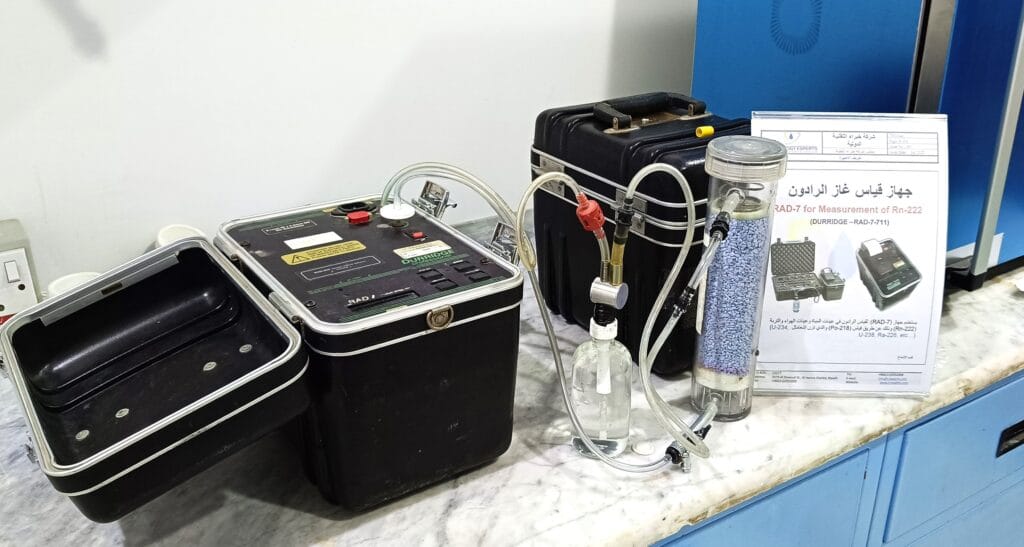
Radon-222 measurement
Radon-222 is a major contributor to natural background radiation and is recognized as a health hazard when accumulated in enclosed spaces. Prolonged exposure to elevated radon levels is strongly linked to lung cancer, making its monitoring essential for public health protection.
Radon-222 is a naturally occurring radioactive gas produced from the decay of radium-226, which itself is a decay product of uranium-238.
Radon-222 is measured from the alpha particles emitted by polonium-218 at an energy of approximately 6.0 MeV. The system is capable of measuring radon concentration rates from 0.1 – 20000 pCi/L (4.0 – 750000 pCi/m³).
Radon-222 measurement
Radon-222 is a major contributor to natural background radiation and is recognized as a health hazard when accumulated in enclosed spaces. Prolonged exposure to elevated radon levels is strongly linked to lung cancer, making its monitoring essential for public health protection.
Radon-222 is a naturally occurring radioactive gas produced from the decay of radium-226, which itself is a decay product of uranium-238.
Radon-222 is measured from the alpha particles emitted by polonium-218 at an energy of approximately 6.0 MeV. The system is capable of measuring radon concentration rates from 0.1 – 20000 pCi/L (4.0 – 750000 pCi/m³).