
Organic Chemical Analyses
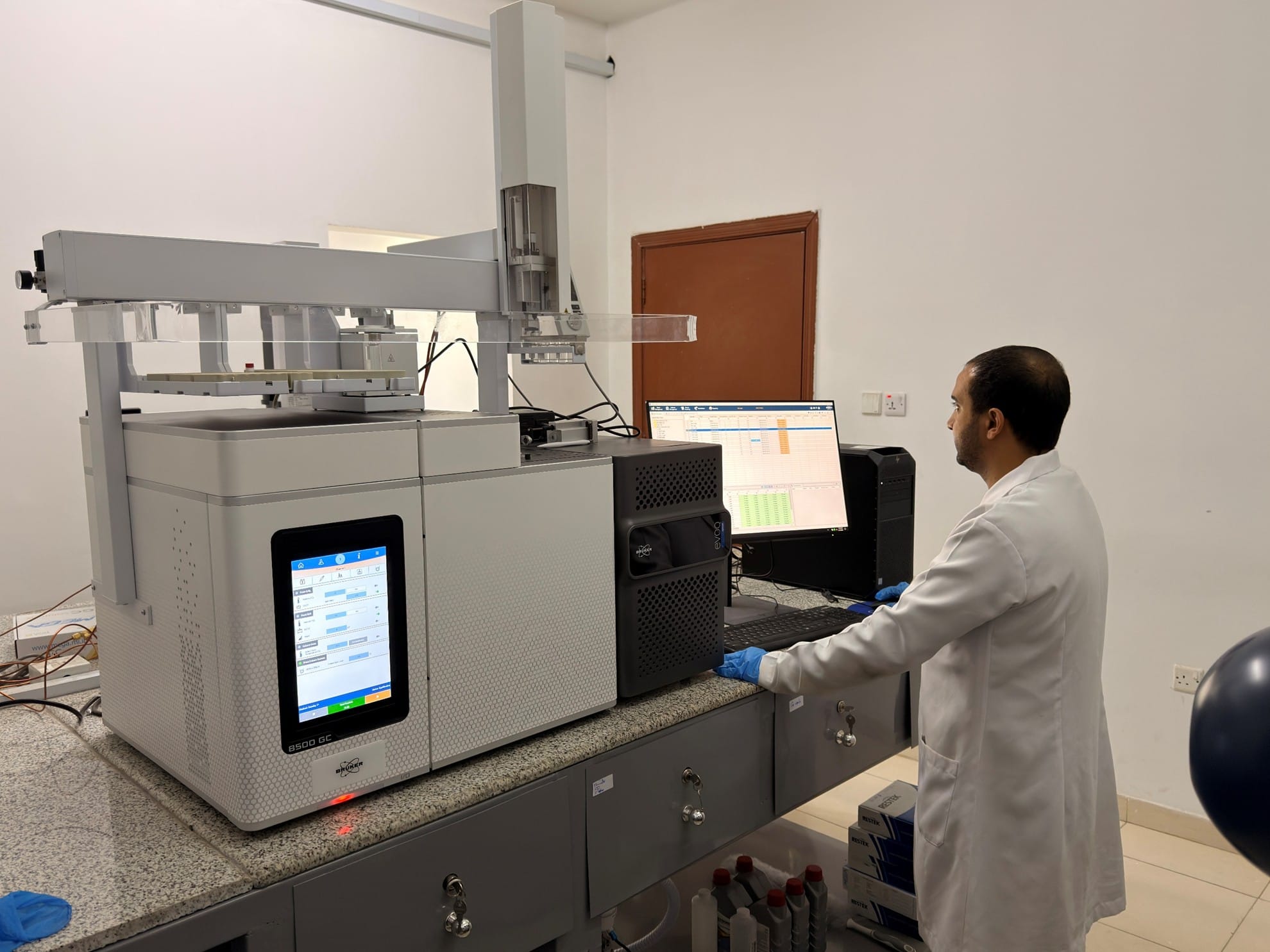
The GC-MS/MS device is used to measure volatile organic compounds (VOCs) and semi-volatile SVOCs using the Purge and Trap system, the Headspace system for sample withdrawal, and the Split/Splitless system for sample injection into the separation column.
This time is called the retention time and is considered a distinctive fingerprint for each compound. Then an ionization source converts the compounds into ionized particles (molecular ions). They are separated using a magnetic field to measure a specific mass for a single ion (Single Ion Monitoring SIM).
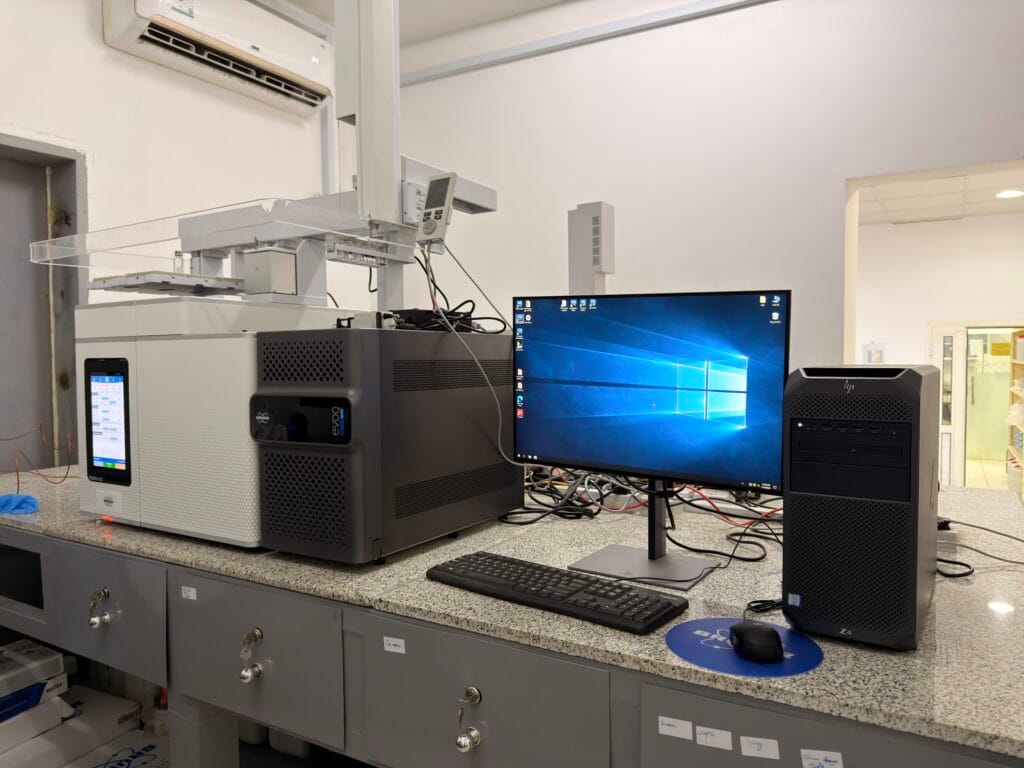
The GC-MS/MS device is used to measure volatile organic compounds (VOCs) and semi-volatile SVOCs using the Purge and Trap system, the Headspace system for sample withdrawal, and the Split/Splitless system for sample injection into the separation column.
This time is called the retention time and is considered a distinctive fingerprint for each compound. Then an ionization source converts the compounds into ionized particles (molecular ions). They are separated using a magnetic field to measure a specific mass for a single ion (Single Ion Monitoring SIM).
The LC-MS/MS device is used to measure heavy organic compounds and some pesticides. Unlike the GC device, the carrier solvent (mobile phase) in the LC device must be polar and not volatile as in the GC device. It does not reach high temperatures, and the column is shorter and wider.
A full scan can be performed after separating the ion. The ion passes through a collision cell to break it into smaller ions in mass. Then it passes through the magnetic field to separate a specific range of mass. This process is called Multiple Reaction Monitoring (MRM).
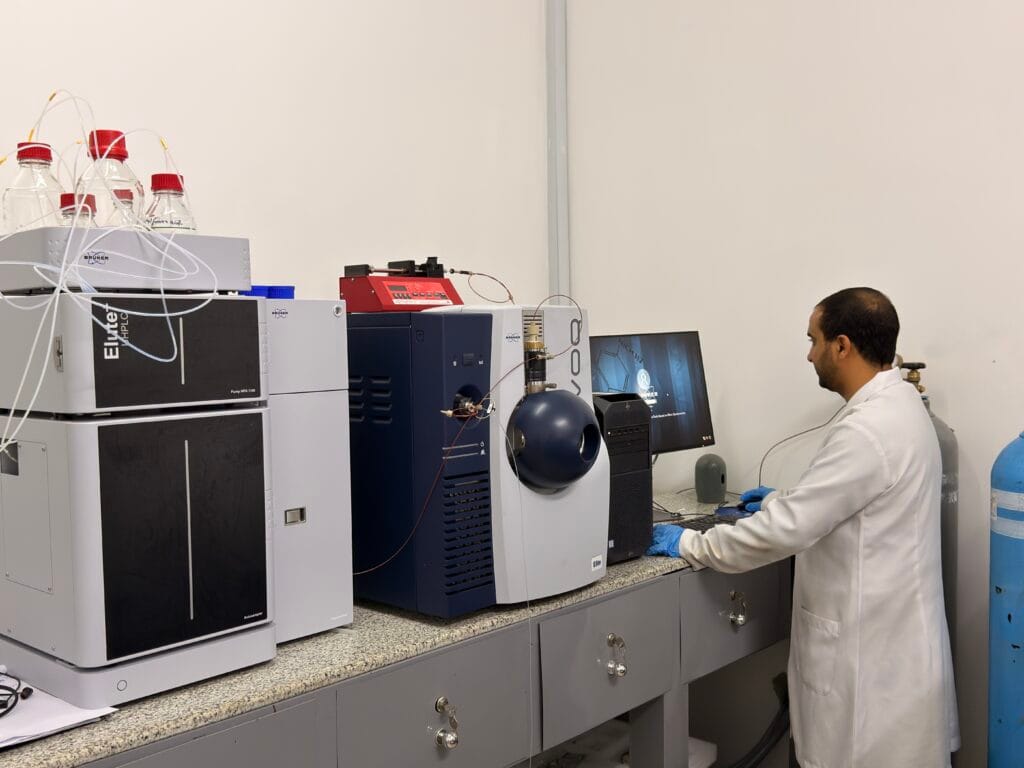
The LC-MS/MS device is used to measure heavy organic compounds and some pesticides. Unlike the GC device, the carrier solvent (mobile phase) in the LC device must be polar and not volatile as in the GC device. It does not reach high temperatures, and the column is shorter and wider.
A full scan can be performed after separating the ion. The ion passes through a collision cell to break it into smaller ions in mass. Then it passes through the magnetic field to separate a specific range of mass. This process is called Multiple Reaction Monitoring (MRM).